DISC is one of the most widely used personality frameworks in the world because it's genuinely simple: it sorts how people naturally act and communicate into four tendencies. Almost everyone is a blend, usually led by one or two. Here's what each of the four DISC personality types means — and why there's no such thing as a "best" one.
What DISC measures
DISC describes behavior — how you tend to approach challenges, people, pace, and rules — rather than intelligence or character. The four letters stand for Dominance, Influence, Steadiness, and Conscientiousness. Let's take them one at a time.
D — Dominance
Direct, decisive, and driven. High-D people are motivated by results and challenge. They make decisions quickly, take charge naturally, and aren't afraid of conflict or risk. At their best they're bold problem-solvers who get things moving. Their growth edge is patience — slowing down to bring others along.
I — Influence
Social, enthusiastic, and expressive. High-I people are motivated by connection and recognition. They're optimistic, persuasive, and energizing to be around — the ones who rally a group and make things fun. Their growth edge is follow-through and attention to detail.
S — Steadiness
Calm, loyal, and dependable. High-S people are motivated by stability and harmony. They're patient listeners and steady teammates who value trust and dislike sudden change. At their best they're the dependable glue of any group. Their growth edge is speaking up for their own needs and adapting when change is necessary.
C — Conscientiousness
Careful, curious, and precise. High-C people are motivated by accuracy and quality. They ask "why," notice details others miss, and want to get things right. At their best they bring rigor and thoughtfulness. Their growth edge is not letting the pursuit of perfect stall progress.
Most people are a blend
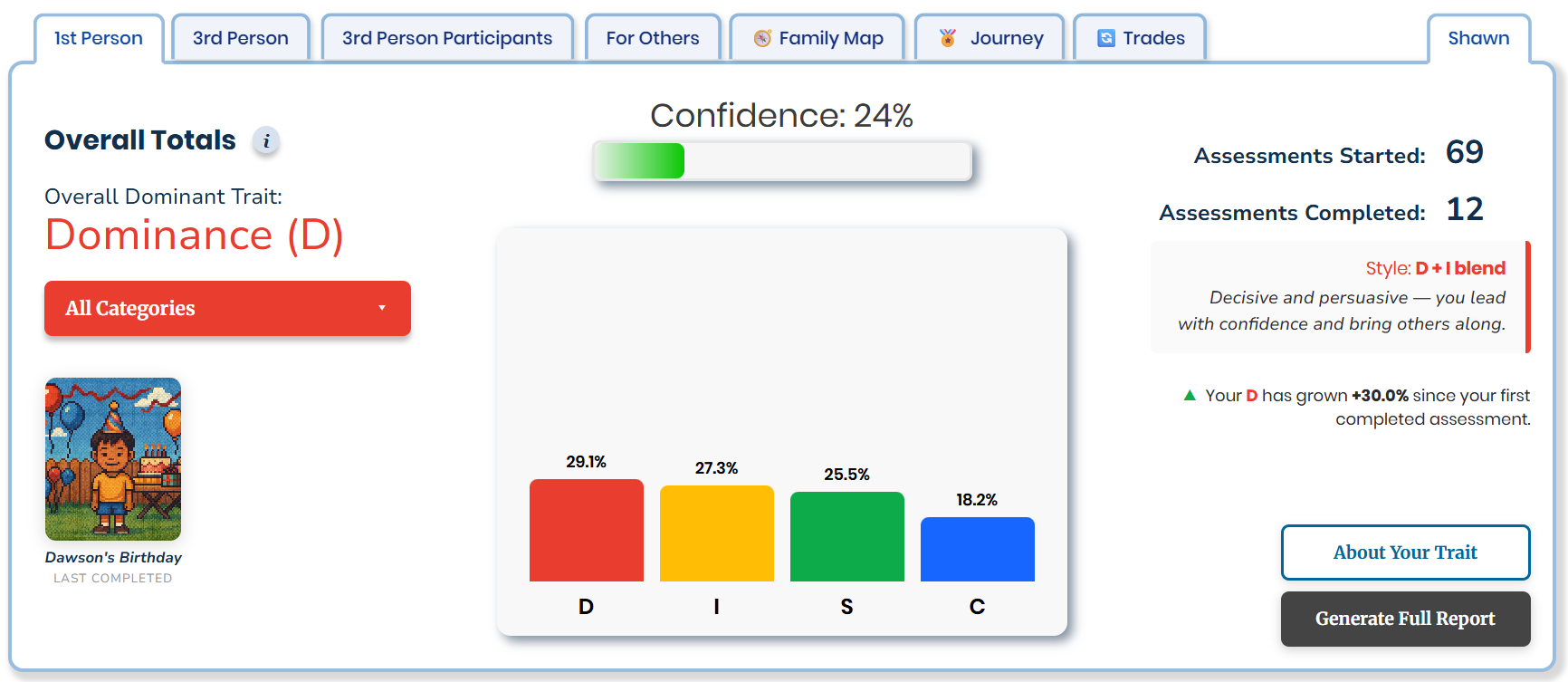
Very few people are a single letter. You might be a high-D with strong C (a decisive planner), or an I/S (a warm connector who values harmony). Your blend is what makes your style specific to you — and it can shift over time, especially in children as they grow.
How the types work together
The magic of DISC is relational. A D and an S balance each other — drive plus steadiness. An I and a C balance each other — energy plus precision. Understanding the mix in a family, classroom, or team explains a lot of everyday friction, and turns "why can't they just be like me?" into "ah, that's their style."
Discover your style through a story
Instead of rating yourself on a questionnaire, you can discover your DISC style by making choices inside a story-based assessment — often more accurate, and a lot more fun. Browse the library to try one, or see the kids' version. Curious about children specifically? Read What Is DISC for Kids?